Technology
Mechanism of Action
How our therapy works
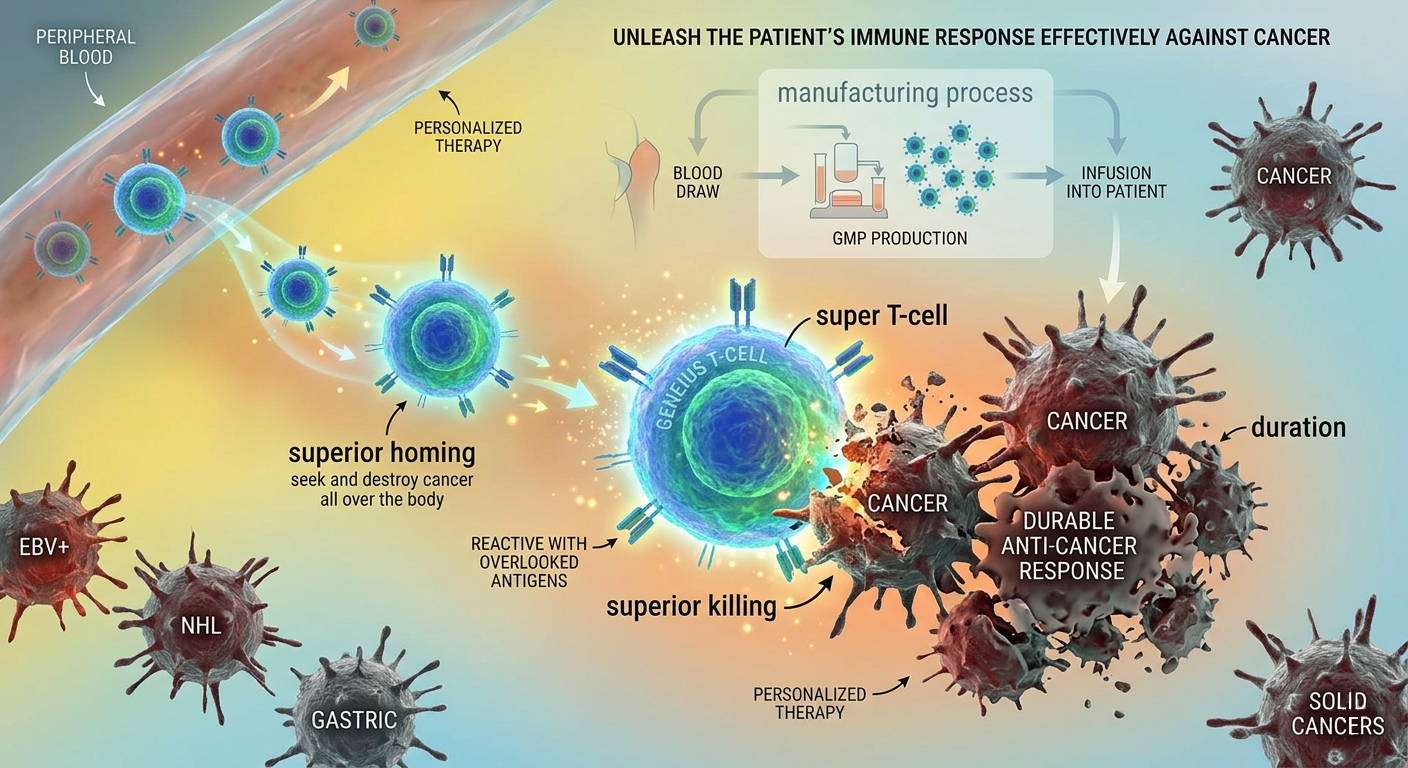
We are developing transformative personalized targeted T-cell therapies for cancers to unleash the patient's immune response effectively against cancer. Geneius's SMAR-T™ platform is designed to re-educate the patient's natural T cells to become more responsive to multiple tumor specific antigens that were previously overlooked by their immune system. This process delivers a specific and durable immune response that we believe is less susceptible to tumor immune evasion. This re-education of the patient's T cells without genetic engineering is more effectively done outside of the patient's body in the patented lab process designed by Geneius.
T-cells killing Pancreatic Cancer
Strategy
Superior killing, homing & duration
Geneius produces T cells that are reactive with previously overlooked antigens and that we believe will result in superior killing, homing and duration of response. The company has created a good manufacturing process (GMP) to produce T cells from peripheral blood for infusion into the patient as we are developing transformative personalized targeted T-cell therapies for cancers to unleash the patient's immune response effectively against cancer. We believe that our products will create a new and effective immune response that will seek and destroy cancer all over the body and lead to a durable anti-cancer response.
Manufacturing
SMAR-T™ process
Geneius has developed a closed-system GMP process to manufacture personalized T-cells used in targeted T-cell therapies for cancers. SMAR-T™ is this process that integrates patient specificity with a standardized and common process that can produce a 100% personalized product while keeping manufacturing costs at a minimum.
With a standard blood draw from a patient, we:
- Identify the cancer driving mutations, and isolate the patient's T-cells
- Train the patient's T-cells to target the specific cancer antigens found in the patient
- Expand the patient's trained T-cells in a proprietary cytokine cocktail
In 4 weeks, enough T-cells have been generated with the appropriate antigen specificity and phenotypes (killing, homing and duration of response) to be infused into the patient to treat their cancer.